
What are UK Speeding Fines? Limits, Penalties & Calculator

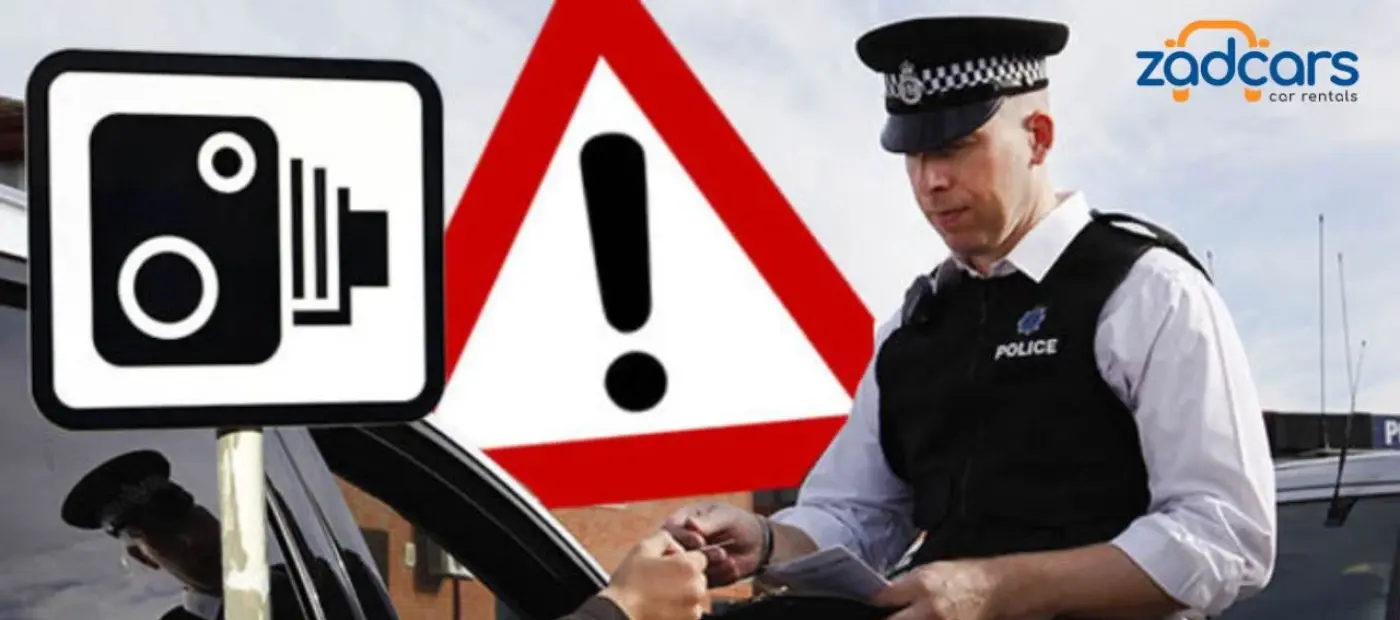
The minimum speed limit fines in the UK are £100 and 3 penalty points added to a driving licence. Under UK driving rules, if 12 or more points are collected within 3 years, a driving ban is imposed. A Notice of Intended Prosecution (NIP) and a Section 172 notice are sent within 14 days for speeding in the UK. These must be returned within 28 days to confirm the driver's identity. A warning, FPN, or court notice may also be given. Paying an FPN usually means accepting guilt, a £100 fine, and 3 points. In some cases, a speed awareness course may be offered.
Speed Limits in the UK
UK speeding fines and speed limits depend on the type of road and vehicle. The example of the allowed speed limit for a car hire in Birmingham or other large cities in different areas is as follows:
|
Built-Up Area |
30 mph |
|
Single Carriageways |
60 mph |
|
Dual Carriageways |
70 mph |
|
Motorways |
70 mph |
Speed Limit Detection Methods
Speed limits are enforced using different methods, such as:

-
Fixed Roadside Cameras
-
Mobile Cameras
-
Police Vans
-
Average Speed Check
-
Police Stops
Pay attention to all the traffic signals and roadside security cameras, even when on a road trip through the UK, to avoid unnecessary penalties and fines.
Speed Penalty Points and Bands
A banding system is used to calculate Speed limit fines in the UK and the number of penalty points. Here is a simple explanation:
|
Speed Limit |
Band A |
Band B |
Band C |
|
20 mph |
21-30 mph |
31-40 mph |
41 mph and above |
|
30 mph |
31-40 mph |
41-50 mph |
51 mph and above |
|
40 mph |
41-55 mph |
56-65 mph |
66 mph and above |
|
50 mph |
51-65 mph |
66-75 mph |
76 mph and above |
|
60 mph |
61-80 mph |
81-90 mph |
91 mph and above |
|
70 mph |
71-90 mph |
91-100 mph |
101 mph and above |
Penalty points based on the bands are as follows:
-
Band A: 3 points
-
Band B: 4-6 points or 7-28 day driving ban
-
Band C: 6 points or 7-56-day ban on driving
How Much is A Speeding Fine in the UK?
The speeding fines in the UK typically start at a minimum of £100 for minor offences. For more serious cases, fines can increase up to £1,000 on most roads and as high as £2,500 for motorway offences. The exact amount usually depends on how much the speed limit was exceeded, with higher speeds leading to larger fines.
How to Calculate the Speeding Fine?
The speeding fine calculator UK is used to calculate the financial penalty as a percentage of the driver’s relevant weekly income. For example:
|
Band |
Fine based on weekly income |
Fine Range |
|
Band A |
50% |
Between 25% and 75% |
|
Band B |
100% |
Between 75% and 125% |
|
Band C |
150% |
Between 125% and 175% |
What Happens When Someone Caught Speeding in the UK?
The speed limit fines in the UK may vary depending on how the offence is detected.
Caught By Roadside Speed Cameras: When a vehicle is caught by a speed camera, a Notice of Intended Prosecution (NIP) and a Section 172 notice are sent within 14 days. The Section 172 form must be returned within 28 days to confirm the driver’s identity. Ignoring it can lead to court action. After replying, a Fixed Penalty Notice (FPN) or a court letter is sent.
Caught by Police: When a driver is stopped by a police officer, they might give a simple verbal warning in minor cases. In other cases, a Fixed Penalty Notice (FPN) may be issued either on the spot or sent by post. There is an option to accept the offence or challenge it. For more serious speeding offences, the case may be sent directly to court. In such situations, a letter is issued with details about what to do next.
How to Pay A Fine for Speeding in the UK?
In most cases, details are provided on the Fixed Penalty Notice (FPN), making it easy to follow the correct method. The fine payment process can vary slightly depending on the region.

-
England and Wales: The payment can be made online through the GOV.UK website using the details on the FPN.
-
Scotland: Payment options include online, phone, or post. Full instructions are available on the Scottish Courts and Tribunals Service website.
-
Northern Ireland: Both parts of the driving licence must be submitted at a local police station. The licence is sent to the Fixed Penalty Office to add penalty points. Once processed, the fine can be paid by phone, post, or in person.
Timeframe for Receiving a Speeding Ticket in the UK
If stopped by the police, the ticket for speed limit fines in the UK is usually issued immediately. A speeding ticket is usually sent within 14 days if the offence is caught by a speed camera. This comes as a Notice of Intended Prosecution (NIP) to the registered vehicle owner. After responding, a Fixed Penalty Notice (FPN) or further action may follow.
Can a Speeding Ticket Be Appealed?
After receiving a Notice of Intended Prosecution (NIP) or a Fixed Penalty Notice (FPN), a UK speeding ticket fine can be appealed for valid reasons. If the appeal is unsuccessful, the penalty may increase.
Acceptable Grounds for Appeal: These are valid reasons to challenge a speeding ticket or parking ticket for a rental car:
-
Unclear, missing, or hidden speed limit signs with proof, such as photos.
-
Another person was driving the vehicle.
-
Strong evidence that the vehicle was not speeding.
-
Faulty or uncalibrated speed camera equipment.
-
Notice of Intended Prosecution (NIP) not received within 14 days.
Unacceptable Grounds for Appeal: These reasons are generally not accepted to appeal for speed limit fines in the UK:
-
Not knowing the speed limit.
-
Being in a hurry or running late.
-
Claiming the road was empty or safe to speed.
Do Speeding Fines Affect Car Insurance?
Yes, the speeding fine can affect the insurance cost. It’s better to inform the car insurance provider after receiving a speeding fine and penalty points on a driving licence. This often leads to an increase in insurance costs, as the driver may be considered a higher risk due to speeding. The amount of increase depends on the insurance company, so comparing different insurance quotes can help find a better deal.
Is There Any Grace for Minor Speeding?
For minor offenses (usually within 10% + 2mph of the limit), drivers may be offered a speed awareness course. This allows the driver to avoid penalty points, though the course fee is often similar to the cost of a fine. This option is typically only available once every three years.
Impact of Speeding on New Drivers
The rules are significantly stricter for those who have passed their driving test within the last two years. If a new driver accumulates 6 or more penalty points during this probationary period, their license is automatically revoked. To drive again, they must reapply for a provisional license and pass both the theory and practical tests once more.
Wrapping Up!
Speed limit fines in the UK are strict and designed to improve road safety. Understanding speed limits, penalties, and enforcement methods helps avoid unnecessary trouble, especially for car rental in the UK. A small mistake can lead to fines, points, or higher insurance costs. However, staying within the speed limit is always the safest.
Questions readers ask
How much is a speeding fine in the UK?
The minimum fine is usually £100 with 3 penalty points.
How many points are given for speeding in the UK?
Speeding in the UK usually starts with 3 penalty points on a driving licence, which can increase to 4-6 points for B offences and up to 6 points or a 7-56 day driving ban for more serious Band C offences.
Can a UK speeding ticket fine be ignored?
No, ignoring the ticket can lead to court action.
What does the UK speeding fines calculator do?
It estimates the likely fine and penalty points based on factors such as the driver’s weekly income, the speed limit, and how much the limit was exceeded.
Can incorrect speed limit fines UK be challenged?
Yes, the incorrect fine ticket can be challenged with evidence.
Do fines for speeding in the UK affect insurance?
Yes, speeding points often lead to higher annual premiums.
What happens if the NIP arrives after 14 days in the United Kingdom?
If the Notice of Intended Prosecution is not sent within 14 days of the offense, the fine might be technically invalid. Exceptions are there, especially for car rental in the UK.
How long do speeding points stay on a license in the UK?
Penalty points for speeding usually stay on a driving record for 4 years.