
Economy Car vs. Compact Car: Which Rental Car Option is Better?

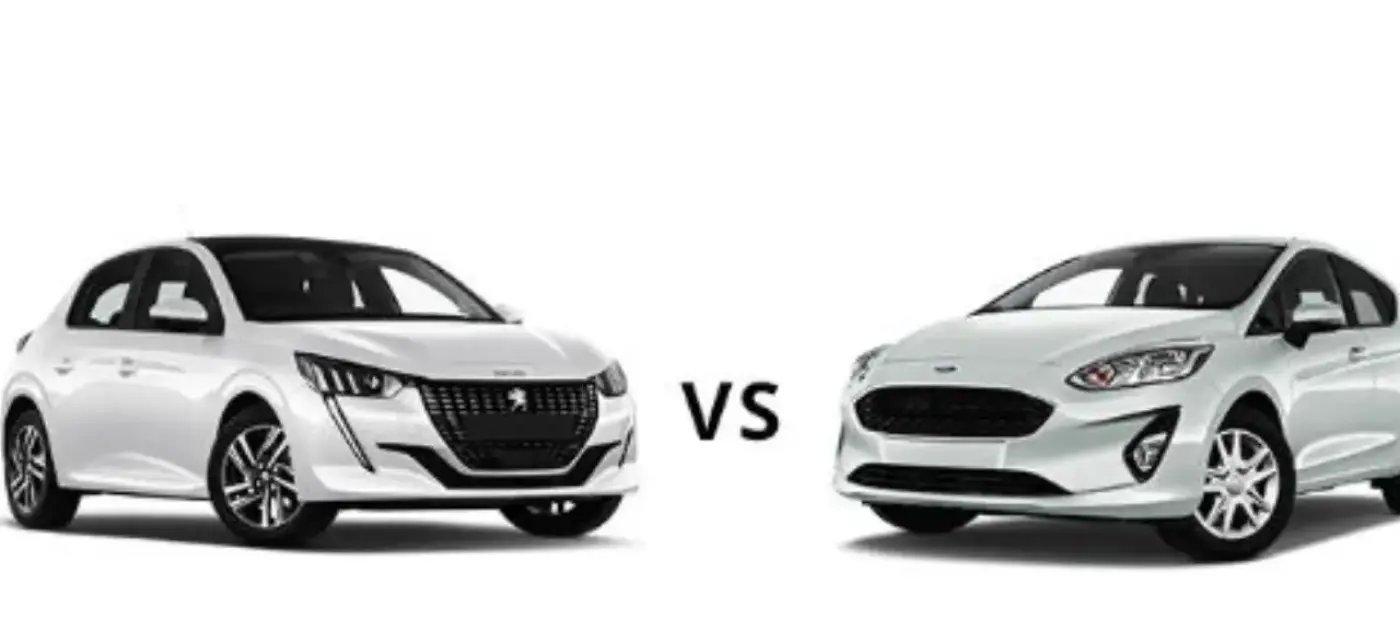
When renting cars to drive in the United States, the size of the vehicle can affect more than the daily fees. Among all options, compact and economy cars are the most practical choices. These are highly preferred by those who are seeking fuel efficiency, pocket-friendliness, and comfort.
Remember, each car has some distinct features. For instance, economy cars are affordable and easy to park, while compact cars offer better trunk and rear-seat space. To make a better decision, it is advisable to understand every aspect of economy vs. compact cars, including prices, features, and suitability for the trip.
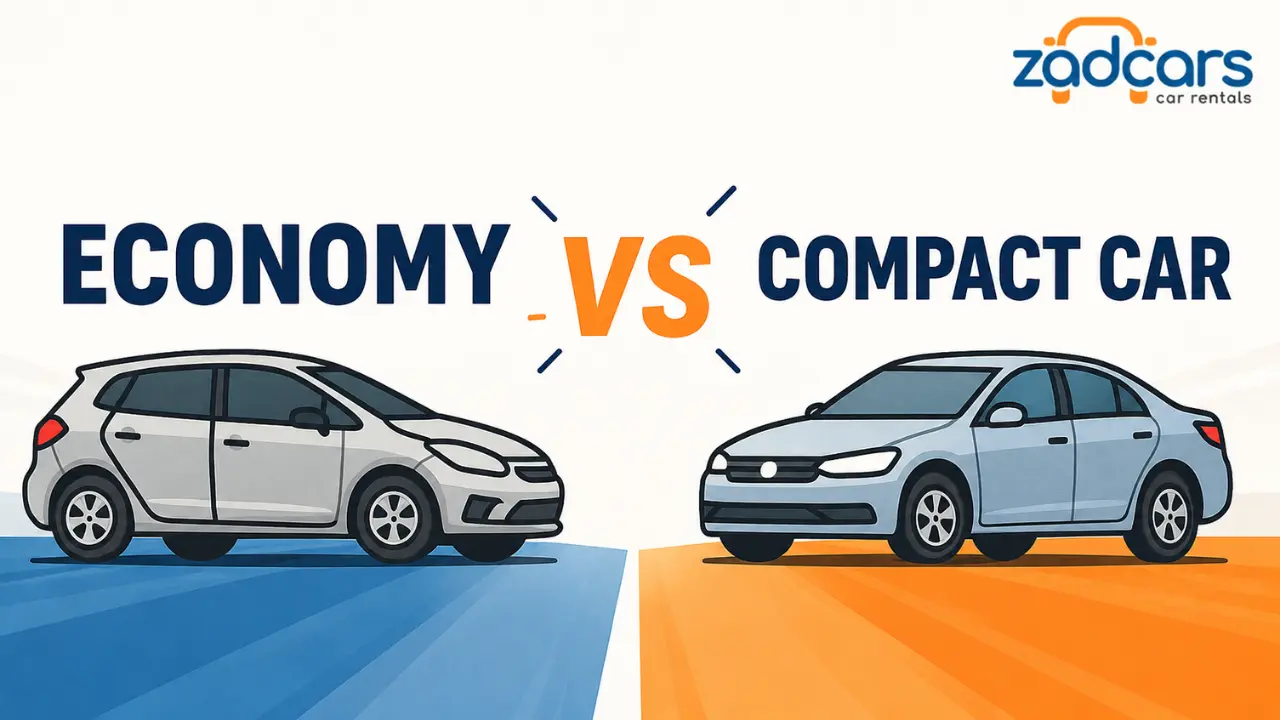
A Quick Overview of the Difference Between Compact and Economy Cars
The major differences between an economy car and a compact car are practicality and size. Simply put, economy cars prioritize affordability, while compact cars ensure enhanced comfort and space.
|
Particulars/Features |
Economy Cars |
Compact Cars |
|
Size |
Small |
Slightly larger |
|
Prices |
Lower |
Slightly higher than economy |
|
Seating Capacity |
3-4 passengers |
5 passengers |
|
Trunk Space |
1-2 big bags |
2-3 big bags |
|
Fuel Efficiency |
Excellent |
Good to excellent |
|
City Driving |
Fabulous |
Good |
|
Parking |
Easier |
Easy |
|
Highway Comfort |
Excellent |
Good |
|
Ideal Choice for |
Couples and solo travelers |
Road trips and small families/groups |
What is an Economy and Compact Car?
To decide better, visitors should know the difference between an economy and compact car based on characteristics and top models.
Economy Cars
This category of rental cars is the smallest among all options offered by rental companies in the USA. This car class is mainly designed to offer practicality instead of maximum truck space. Here are some of its characteristics:

-
Lower rental fees
-
Smaller exterior footprint
-
Excellent fuel efficiency
-
Limited trunk space
-
Ideal for short road trips
-
Easy maneuverability
-
3-4 people can sit comfortably
-
Kia Rio and Mitsubishi Mirage are popular models
Compact Cars
This car category is one step up from the economy cars. With a slightly larger trunk and cabin space, passengers will have better comfort when driving and traveling in it. Besides, these features distinguish this category from economy cars:

-
Larger luggage space
-
Wider rear-seat room
-
Better fuel efficiency
-
More comfort
-
Suitable for longer road trips
-
Stable highway driving experience
-
Top models include Honda Civic, Nissan Sentra, and Toyota Corolla
Economy Car vs. Compact Car: What are the Pros and Cons?
Each car category comes with some pros and cons. By assessing each aspect, one can make a wise decision:
Economy Cars
Since these cars are one of the most preferred categories, visitors must compare the pros and cons before deciding:

Pros
-
Lowest base rental rates
-
Seamless driving
-
Easy to park
-
Exceptional fuel efficiency
-
Perfect for city driving
-
Practical choice for couples and solo travelers
Cons
-
Limited rear-seat space
-
Small trunk space
-
Not suited for 4-5 adult passengers
-
Less ideal for long highway trips
-
Fewer features
Compact Cars
Anyone who needs a slightly upgraded car from economy ones usually goes with compact cars. However, checking every aspect, including pros and cons, will help new visitors make a wise choice.

Pros
-
More luggage space
-
A little wider seats for passengers
-
Comfortable choice for longer road drives
-
Ideal for small groups and families
-
Excellent fuel economy
-
Versatile choice for road travel and city trips
-
Offers overall great value for longer rentals
Cons
-
Costlier than economy car rentals
-
A little hard to move in a tight space
-
Consumes more fuel than economy cars
-
Higher one-way rental cost
-
Slightly higher cost for upgrades
Which Rental Car Visitors Must Choose?
The selection between economy vs. compact rental car solely depends on the purpose of the trip and duration of the itinerary. Besides, one can consider the following to decide better:

Opt for economy cars if,
-
A renter wants affordable vehicles for their trip.
-
They want to drive mostly around the city.
-
A person is traveling alone or with their partner.
-
Travelers have limited bags.
-
A visitor is looking for a fuel-efficient car that is easy to drive and park.
Choose compact cars if,
-
The group or family has 3-5 adult passengers
-
They have more bags.
-
People need more luggage space.
-
A group wants greater comfort and ease.
-
Passengers have a planned long trip.
-
Someone is expecting long highway driving.
Insider Tip: Opt for economy rental cars in New York and other places where parking space is tighter, and roads are busier.
How to Choose Between Economy and Compact Car?
By keeping a few simple tips in mind, one can choose the most suitable vehicle between an economy and a compact car:

-
Check the number of bags that a person wants to carry. Based on the same, they can choose the car that has adequate luggage space to keep bags safely.
-
Know the number of passengers to decide between the economy and compact cars. For instance, an economy car is perfect for solo travelers and couples.
-
Consider the duration of the trip. Keep in mind that a compact car is considered a better choice for a longer road trip.
-
Always look beyond the published daily rates. Visitors are advised to compare prices, including hidden fees that include airport fees, facility charges, taxes, etc.
-
For example, rental cars at Miami Airport are higher than downtown and off-site locations due to extra fees involved.
-
The fuel cost of each car category varies. The fuel cost of economy cars is lower than that of compact cars.
-
Think about driving experience and parking. When driving in dense urban regions, opt for economy cars; otherwise, compact cars can be chosen.
Latest News and Updates about the Rental Market of Economy and Compact Cars
In recent years, the market for rental cars has grown massively. As per the latest news, the market has seen a growth of USD 153.47 billion in 2025. It is also estimated to grow to 169.36 billion in 2026, while it may touch the 277.28 billion mark by 2031. Amid these great numbers, compact and economy cars will remain the most preferred choice:

-
In 2025, the car rental market had the largest share of economy and mini cars. It was around 36.30%.
-
Compact cars were also in high demand due to fuel efficiency and upgraded features.
-
Leisure travelers demanded 55.68% of rental cars in 2025, where their main priority was wider luggage space and fuel efficiency.
-
On these parameters, economy and compact cars stand at the top.
-
These car categories were also a top choice among corporate renters and price-sensitive renters with daily travel budget limits.
-
For city breaks, airport trips, weekend travel, and short journeys, 64.88% of the entire rental market is shared by economy cars.
-
In 2025, 66.02% of the market was focused on easy-to-drive and park vehicles, which also include compact and economy cars.
-
With 35.02% of bookings in North America, compact and economy cars emerged as a practical choice in 2025.
-
Prominent car rental agency SIXT is expected to add 250,000 more vehicles to its fleet, which also includes a good number of compact and economy cars.
Note: The latest data shows economy cars as the most ‘value-focused’ car category, while compact cars are presented as ‘comfort-space balance’ vehicles.
Closure,
For new visitors, economy cars vs. compact cars is a big puzzle. However, they can ease the choice by considering a few things. For instance, economy cars are suitable for efficiency, prioritize affordability, and quick parking even in tight spaces. Compact cars, on the other hand, are a smarter choice for slightly bigger groups, families, long road trips, and luggage-heavy travels. Lastly, compare pros and cons, along with the final rental rates, to decide better.
Questions readers ask
What is the difference between an economy car and a compact car?
The main differences between these car categories are based on the passenger capacity, luggage space, features, and rental prices.
Is an economy car bigger than a compact?
No, economy cars are a little smaller than compact cars in size. Compact cars offer more space for passengers and luggage, while economy has limited space for these.
Which car is cheaper, economy or compact?
Even though economy cars are more affordable than compact cars, the prices may fluctuate or remain the same for them based on demand, availability, season, and location.
Which car option is better for a road trip in the USA between compact and economy?
Between compact and economy, compact cars are considered a better choice for a road trip, as they have more luggage space, passenger capacity, and comfortable seats.
How many adults can easily fit in economy cars?
Since these cars have tight space, it is only a perfect option for solo travelers, couples, and even a small family of 3-4 (2 adults and 2 kids).